About Asokore Mampong Municipal Assembly
One of 261 Metropolitan, Municipal and District Assemblies in Ghana, serving the Ashanti Region with dedication and transparency.
Our Location
The Municipality forms boundaries with Kumasi Metropolitan Assembly (KMA) to the east, south and west, Kwawu East Municipal to the North-west and Ejisu Municipal to the South-East.
Communities We Serve
Our area covers Aboabo No.1, Aboabo No.2, Adukrom, Akurem, Asokore Mampong, Sawaba, Asawasi, New Zongo, Sepe-Timpom and Akwatia Line.
Our Structure
The Assembly comprises 15 Assembly Members, the Municipal Chief Executive, Member of Parliament (Ex Officio Member), and 18 Unit Committees.
Our Services
Access essential municipal services and resources designed to serve our community efficiently.
Waste Management Services
The Waste Management Department of the Asokore Mampong Municipal Assembly provides comprehensive waste management and sanitation services including solid and liquid waste collection, public cleansing, and advisory services. These are carried out directly by the Assembly or through accredited private providers under contract or franchise arrangements.
Learn MoreEnvironmental Health Services
The Environmental Health Department of the Municipal Assembly promotes and protects public health and safety through enforcement of standards, environmental monitoring, and sanitary services across hospitality, industrial, residential and public-use premises.
Learn MoreOutdoor Advertising Permit
The permit authorises the erection and operation of billboards, signage and other outdoor advertising structures within the municipality. Applicants must satisfy regulatory, structural and site-planning requirements before a permit is issued and monitored.
Learn MoreDocuments & Resources
Access important documents, policies, forms, and reports.
CLIENT SERVICE CHARTER ASOKWA MUNICIPAL ASSEMBLY
The Asokore Mampong municipal assembly (AMMA)is a Local Authority which is part of the 43 Administrative Districts in the Ashanti Region of Ghana.
ASOKORE MAMPONG RTI INFORMATION MANUAL
This Right to Information (RTI) Manual is pursuant to the provisions of the recently passed Act, (Act 989) by Parliament and assented to by the President, Nana Addo Dankwa Akuffo-Addo. The Act gives substance to the constitutional right to information provided under Article 21 (1) (f) of the Constitution, enabling citizens access to official information held by government institutions, and the qualifications and conditions under which the access may be obtained. In accordance with Section 80, the Act applies to information which came into existence before, or which will come into existence after the commencement of the Act.
2025 ANNUAL PROGRESS REPORT (APR)
The 2025 Annual Progress Report (APR) of the Asokore Mampong Municipal Assembly presents an assessment of the implementation of programmes and projects under the 2022–2025 Medium-Term Development Plan (MTDP) within the national policy framework of Agenda for Jobs II: Creating Prosperity and Equal Opportunity for All. The report evaluates the progress made between January and December 2025, highlighting key achievements, financial performance, project implementation status, institutional capacity, and challenges encountered during the implementation period. It also serves as a monitoring and evaluation instrument to support evidence-based decision- making and improved development planning within the Municipality. The preparation of the report was coordinated by the Municipal Planning Coordinating Unit (MPCU) through a participatory process involving heads of departments, representatives of traditional authorities, civil society groups, and other key stakeholders. Monitoring activities included field inspections, project site meetings, stakeholder consultations, and validation of administrative data obtained from departmental performance reports. These monitoring exercises helped ensure accountability, value for money, and alignment of development interventions with the Municipality’s strategic development objectives. Overall implementation performance of the Municipal Annual Action Plan remained strong in 2025. Out of 86 planned interventions, 78 were successfully implemented, representing an implementation rate of approximately 90.7 percent. Social Development recorded one of the highest implementation levels, achieving 96.3 percent, while Environment, Infrastructure and Human Settlements, Emergency Planning and Response, and Implementation, Coordination, Monitoring and Evaluation all achieved 100 percent implementation. Economic Development recorded 87.5 percent, and Governance, Corruption and Public Accountability achieved 88.2 percent implementation. These results demonstrate the Assembly’s strong commitment to implementing development programmes aimed at improving living conditions within the Municipality. An assessment of performance across the four-year planning period (2022–2025) shows generally high levels of implementation. Programme execution rates were 96 percent in 2022, 95 percent in 2023, 87 percent in 2024, and 91percent in 2025. Although a slight decline occurred in 2024, the recovery observed in 2025 indicates improved coordination, strengthened monitoring, and better management of development activities. Despite this positive performance trend, the proportion of completed projects declined in 2025, while the number ofongoing interventions increased significantly. This indicates that several projects are still in progress and require continued financial support and supervision to ensure timely completion and realization of their development benefits. In terms of project implementation, 33 physical development projects were recorded during the reporting year across sectors such as education, health, infrastructure, and governance. Out of these, 22 projects were ongoing, 8 were completed, and 2 were yet to commence by the end of the year. These projects included the construction of classroom blocks, health facilities, CHPS compounds, mechanized boreholes, roads, drainage systems, and sports facilities. Major infrastructure investments such as road upgrading projects in Sepe Timpom, Adukrom, and Parkoso represent significant financial commitments aimed at improving urban mobility and economic activity within the Municipality. The projects were financed through a combination of funding sources including the District Assemblies Common Fund (DACF), Government of Ghana (GoG), Internally Generated Fund (IGF), GETFund, Ghana Road Fund, and Member of Parliament initiatives. Among these, the DACF accounted for the largest share of funding, supporting approximately 42 percent of projects, highlighting the Assembly’s heavy reliance on statutory transfers. Although the Assembly undertook some projects using IGF, the limited number indicates relatively low internal revenue capacity. Strengthening IGF mobilization therefore remains critical for improving fiscal autonomy and reducing dependence on central government transfers. Sectoral analysis of development interventions indicates that the majority of projects were concentrated in Environment, Infrastructure and Human Settlements, Governance and Public Accountability, and Social Development. Together, these sectors accounted for about 88 percent of all projects implemented between 2022 and 2025. Investments in these areas were aimed at improving service delivery, enhancing infrastructure development, strengthening institutional capacity, and promoting social welfare. However, the relatively low number of projects under Economic Development suggests limited direct interventions in job creation and productive sectors, which may affect long-term economic growth and local revenue generation. Programme implementation also contributed significantly to social and institutional development. Key programmes implemented included community engagement initiatives, revenue improvement strategies, monitoring and evaluation activities, support for farmers’ day celebrations, training and capacity building for staff, public education on spatial planning and climate change, sanitation improvement activities, and social protection programmes such as the Livelihood Empowerment Against Poverty (LEAP). These interventions collectively improved community participation, strengthened institutional governance, and enhanced the delivery of essential public services. Despite these achievements, several challenges affected the effective implementation of programmes and preparation of the Annual Progress Report. Key among these were difficulties in accessing timely and reliable data from departments and non-decentralized agencies, delays in the submission of departmental reports, and inadequate logistics such as vehicles, computers, and printers to support monitoring and evaluation activities. These constraints limited the efficiency of the Municipal Planning Coordinating Unit and affected the timeliness of reporting. To address these challenges, the Assembly intends to strengthen institutional coordination and improve internal reporting systems through clearer reporting guidelines and regular performance review meetings. Efforts will also be made to improve data sharing with non-decentralized agencies, enhance staff capacity in monitoring and evaluation, and invest in essential logistics to support planning activities. Additionally, strengthening internally generated revenue mobilization and improving project prioritization will be critical to sustaining development gains and ensuring the successful implementation of future development plans. In conclusion, the 2025 Annual Progress Report indicates that the Asokore Mampong Municipal Assembly has made considerable progress in implementing its development programmes and projects under the 2022–2025 Medium-Term Development Plan. W hile overall implementation performance remains high, addressing funding constraints, strengthening monitoring systems, and improving project completion rates will be essential to ensuring that development interventions translate into sustainable improvements in livelihoods and economic growth within the Municipality.
Report_of_the_Auditor-General_on_the_Accounts_of_District_Assemblies_for_the_Financial_Year_Ended_31
Report_of_the_Auditor-General_on_the_Accounts_of_District_Assemblies_for_the_Financial_Year_Ended_31
Report_of_the_Auditor-General_on_the__Management_and_Utilisation_of_the__District_Assemblies_Common
Report_of_the_Auditor-General_on_the__Management_and_Utilization_of_the__District_Assemblies_Common
2026 Annual Action Plan B
2026 Annual Action Plan B
Latest News & Updates
Stay informed about recent developments and announcements.
 community
1 min read
community
1 min read
Asokore Mampong Municipal Assembly Undertakes Monthly Clean-Up Exercise at Buobai
On Saturday, 10 October 2026, the Municipal Chief Executive of Asokore Mampong, Hon. Ben Abdallah Alhassan, joined Heads of Departments and staff of the Municipal Assembly, the Assembly Member for the Buobai Electoral Area, and community residents to undertake the monthly clean-up exercise at Buobai
Read More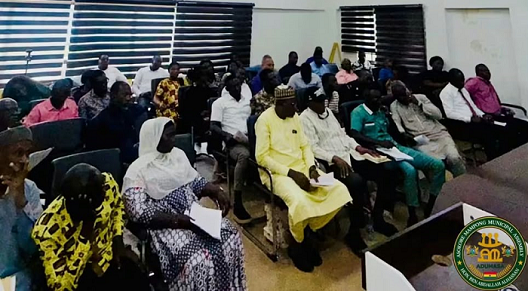 government
1 min read
government
1 min read
Asokore Mampong Municipal Assembly Holds Second Ordinary Meeting of the Third Session
The Asokore Mampong Municipal Assembly on Monday, 28 September 2025, held its Second Ordinary Meeting of the Third Session of the Fourth Assembly at the Executive Conference Hall of the Asokore Mampong Municipal Assembly.
Read More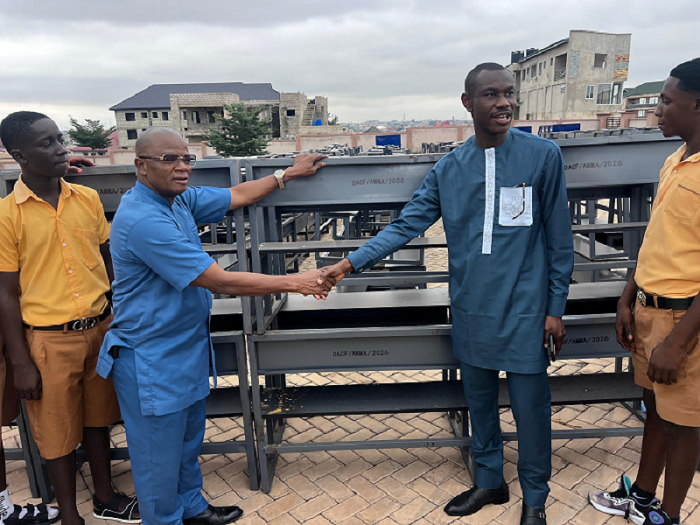 development
1 min read
development
1 min read
Asokore Mampong Municipal Assembly Distributes 400 Dual Desks to Support Education
Earlier this morning, the Asokore Mampong Municipal Chief Executive, Hon. Ben Abdallah Alhassan, officially handed over 400 dual desks to the Municipal Education Directorate as part of the Assembly’s continued efforts to improve teaching and learning conditions within the Municipality.
Read MoreFeatured Projects
Showcasing our commitment to community development and infrastructure.
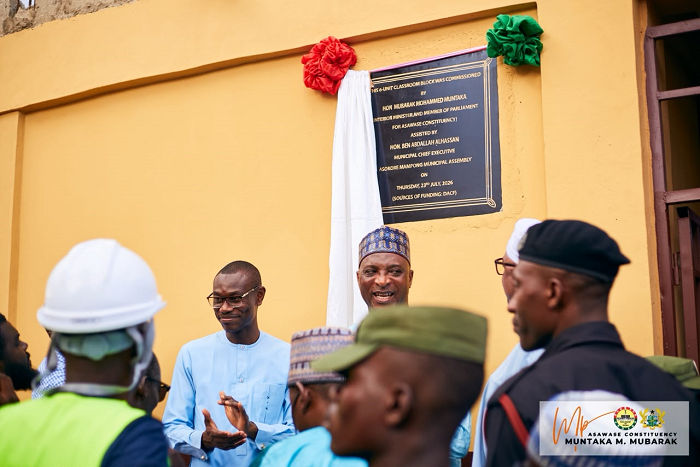
COMPLETION OF ASOKORE MAMPONG R/C PRIMARY SCHOOL BLOCK
COMPLETION OF ASOKORE MAMPONG R/C PRIMARY SCHOOL BLOCK
Learn More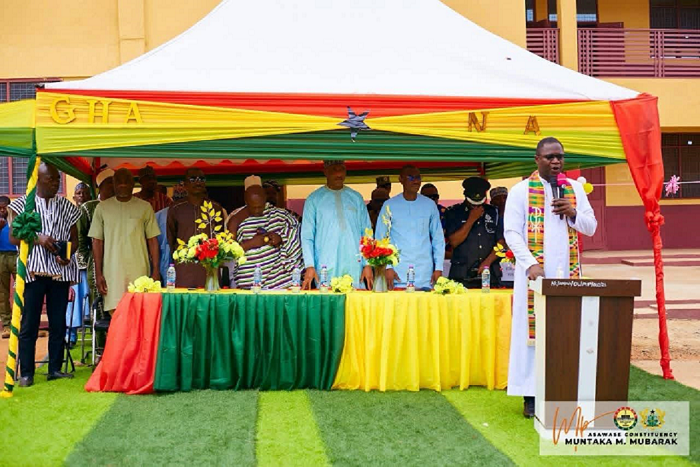
COMPLETION OF ABOABO MIDDLE B
The facilities, comprising a three-unit classroom block and a six-unit classroom block
Learn More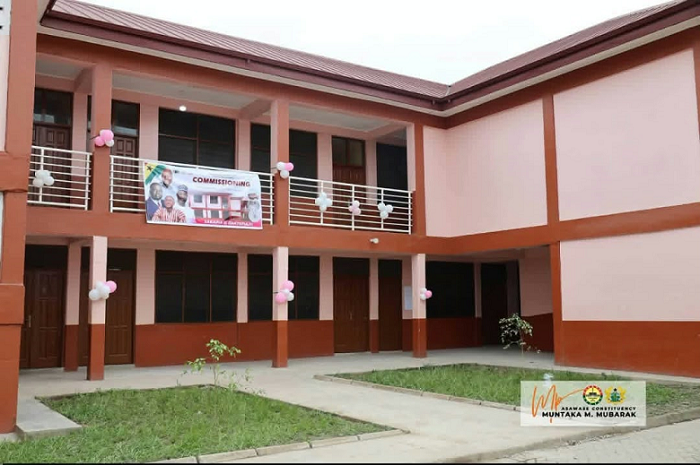
New Educational Facilities at Sakafia Senior High School
The facilities comprise a six-unit first-floor classroom block, complete with offices and stores, as well as a six-seater water closet (W/C) facility.
Learn MoreOur Leadership
Meet the dedicated leaders serving our community with integrity and commitment.

Hon. Ben Abdallah Alhassan
Municipal Chief Executive
<p>Leading the municipal assembly with vision and dedication to community development and transparent governance.</p>

Mr. Isaac Kwame Elimmah
Municipal Coordinating Director
Coordinating municipal operations and ensuring efficient service delivery to all communities in our jurisdiction.
Get in Touch with Us
Have questions or need assistance? Our team is here to help you with all your municipal service needs.